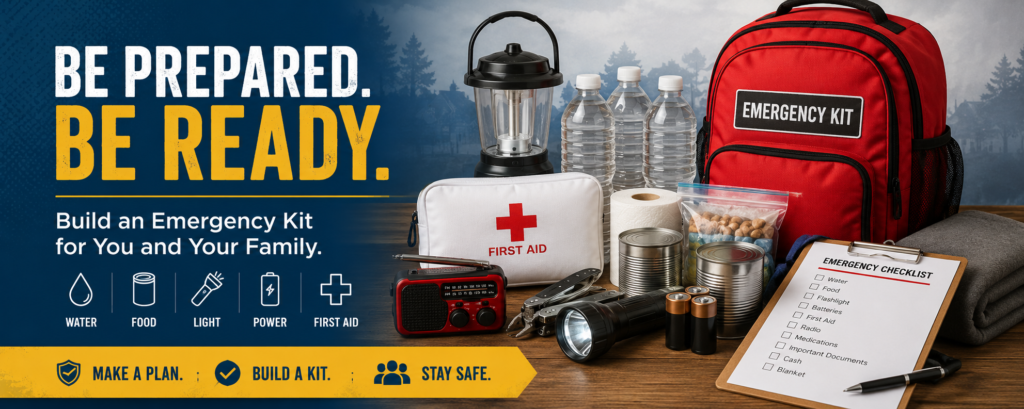
Build Your Emergency Kit Before Disaster Strikes
After an emergency, it may take several days before help reaches you. Having your own supplies ready could save your life. Lancaster County is vulnerable to hurricanes, coastal flooding, tornadoes, and severe thunderstorms — so being prepared isn’t optional, it’s essential.
The Basic Kit (72-Hour Supply)
Your kit should sustain your household for at least 72 hours, stored in airtight containers or easy-to-carry bins. Here are the essentials:
Water & Food
- One gallon of water per person per day (don’t forget pets!), and food requiring minimal water, no refrigeration or cooking
Communication & Power
- AM/FM radio and a NOAA Weather Radio with extra batteries, plus cellular phone charging devices
Safety & First Aid
- Flashlight, first aid kit, whistle to signal for help
- Prescription medications and glasses, infant formula and diapers if needed
- Household chlorine bleach (use 16 drops per gallon to treat water in an emergency), fire extinguisher, and matches in a waterproof container
Documents & Finances
- Important family documents (insurance policies, ID, bank records) in a portable waterproof container, plus cash and change
Clothing & Shelter
- A sleeping bag or warm blanket per person, and a complete change of clothing including long pants, long-sleeved shirt, and sturdy shoes
Additional Tips
It can take several days or weeks for government services to reach you depending on the severity of the disaster and your location. An emergency kit is vital to sustaining your family after a disaster.
- Build your kit over time — add a few items each week or month. Many emergency preparedness products are eligible for Virginia’s tax-free weekend held annually in August (the first Friday through Sunday).
- Write down phone numbers and email addresses for your household and contacts, including extended family, friends, neighbors, and coworkers — in case your mobile device runs out of battery.
- Identify someone outside your community or state who can serve as a central point of contact to help your household reconnect after a disaster.
Kits for Special Needs
- Pets: Keep a separate pet emergency kit with food, water, and supplies alongside your family kit.
- Medical equipment users: Register with your utility provider if you rely on electric-powered medical equipment (respirators, dialysis machines, apnea monitors) so they can contact you during outages.
- Seniors & people with disabilities: VDEM offers a dedicated checklist— link to VDEM’s disability preparedness checklist