Extreme Heat Preparedness
There is hot, and then there is hot! Extreme heat is a period of high heat and humidity with temperatures above 90 degrees for at least two to three days. In extreme heat your body works extra hard to maintain a normal temperature, which can lead to death. Extreme heat is responsible for the highest number of annual deaths among all weather-related hazards. Additional information is available at: https://www.ready.gov/heat
Tips:
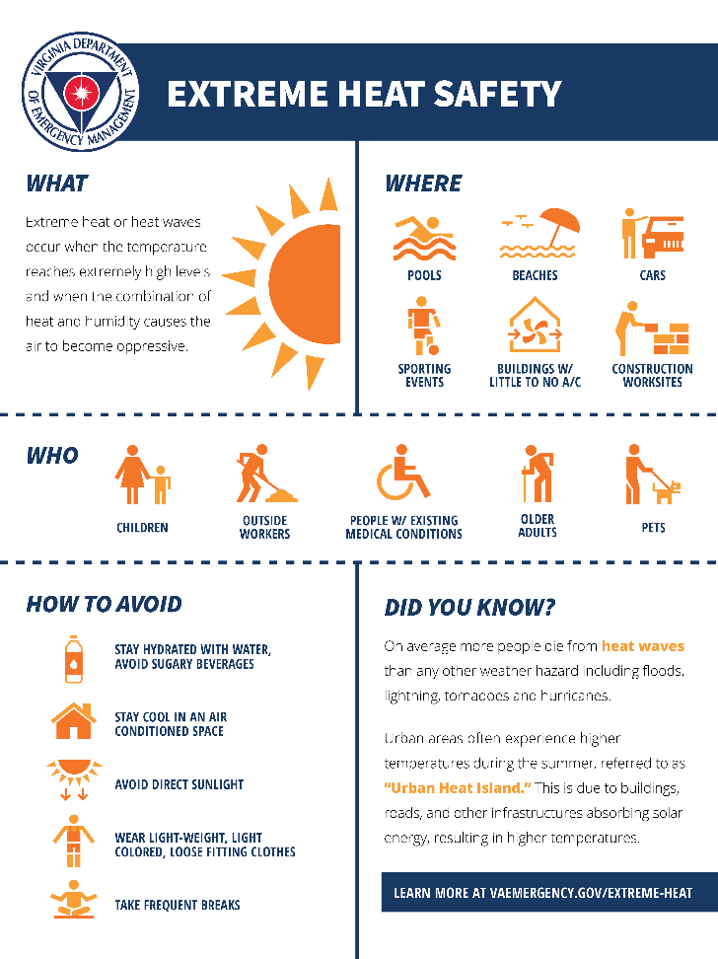
- Drink plenty of non-alcoholic fluids like water, even if you’re not thirsty
- Wear lightweight, loose-fitting clothing
- Stay cool by staying indoors during the hottest parts of the day
- Schedule outdoor activities carefully and wear sunscreen
- If you exercise outdoors, go in the morning or evening hours
- Eat light, regular meals — avoid hot foods and heavy meals
- Never leave anyone — infants, children, or pets — in a parked car
- Know the signs of heat-related illness — these include:
- An extremely high body temperature (above 103°F)
- Red, hot and dry skin (no sweating)
- Rapid, strong pulse
- Throbbing headache

Heat Illness Symptoms
- During extremely hot and humid weather, your body’s ability to cool itself is challenged. When the body heats too rapidly to cool itself properly, or when too much fluid or salt is lost through dehydration or sweating, body temperatures rise, and you or someone you care about may experience a heat-related illness.
- Heat illness can set in quickly. Heat cramps are often the first sign. If steps are not taken, this can lead to heat exhaustion and even heat stroke. Heat Stroke is a serious medical emergency.
- Be aware of these symptoms and seek medical attention if needed.
- Cramps or muscle spasms
- Heavy Sweating
- Dizziness
- Thirst
- Nausea or Vomiting
- Weakness
- Weak Pulse
- Confusion
- Becomes Unconscious
- Using a fan to blow air in someone’s direction may actually make them hotter if heat index temperatures are above the 90s. Click here for more heat illness tips.
- Learn about dehydration
- Know the signs of heat cramps, exhaustion, and stroke
Heat Wave Safety Tips
- Slow down
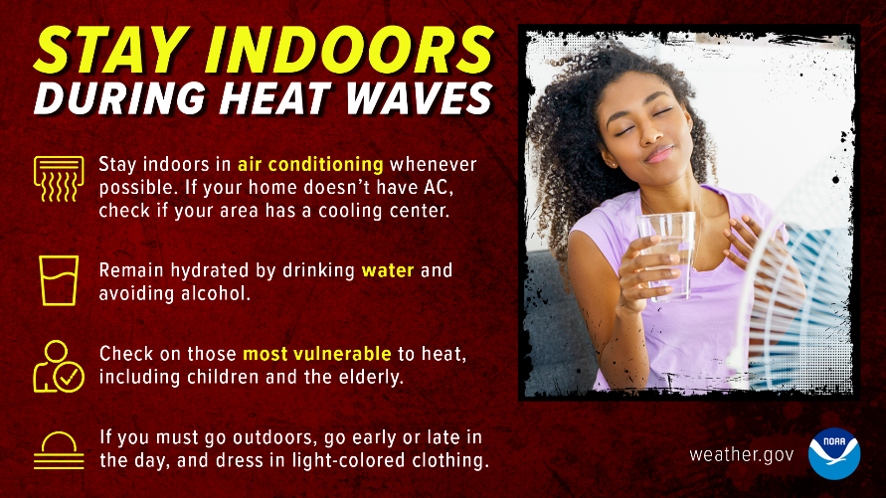
- Dress for the heat, wear light colored clothing
- Be mindful of what you eat
- Your body needs water to keep cool – drink plenty of fluids even if you don’t feel thirsty.
- Do not take salt tablets
(Unless specified by a physician) - Don’t get too much sun – remain in shaded areas as much as possible
- Check on friends and relatives, especially the very young or elderly
- Limit outdoor activities. Try to plan activities for the coolest times of the day: before noon and in the evening.
- Spend more time in air-conditioned places
- When physically active, rest frequently in the shade.
- Take care of your pets.
Tips for At-Risk Groups: Children, Teens, & Seniors
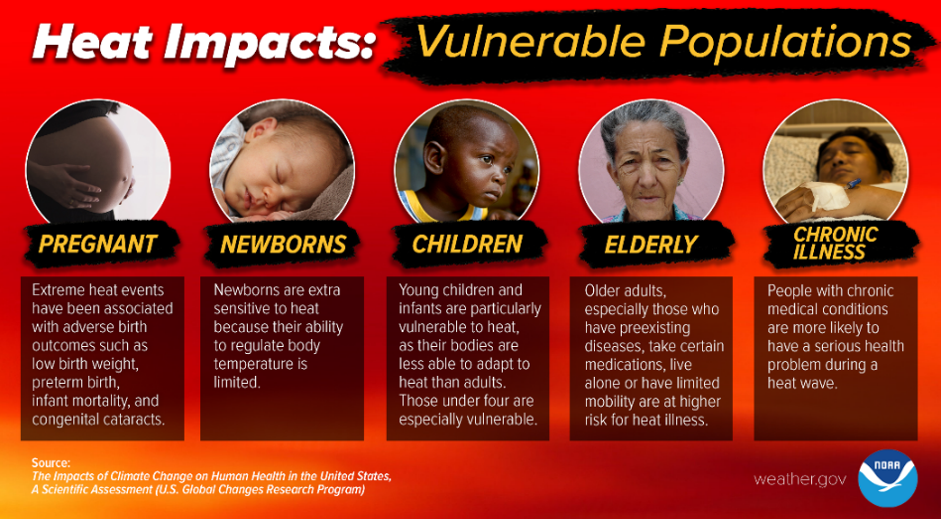
- Young children and infants are particularly vulnerable to heat-related illness and death, as their bodies are less able to adapt to heat than are adults.
- Older adults, particularly those who have pre-existing diseases, take certain medications, are living alone or have limited mobility who are exposed to extreme heat can experience multiple adverse effects.
- People with chronic medical conditions are more likely to have a serious health problem during a heat wave than healthy people.
- Pregnant women are also at higher risk. Extreme heat events have been associated with adverse birth outcomes such as low birth weight, preterm birth, and infant mortality, as well as congenital cataracts.
- Learn about heat illness in kids
- Sun safety tips for the whole family
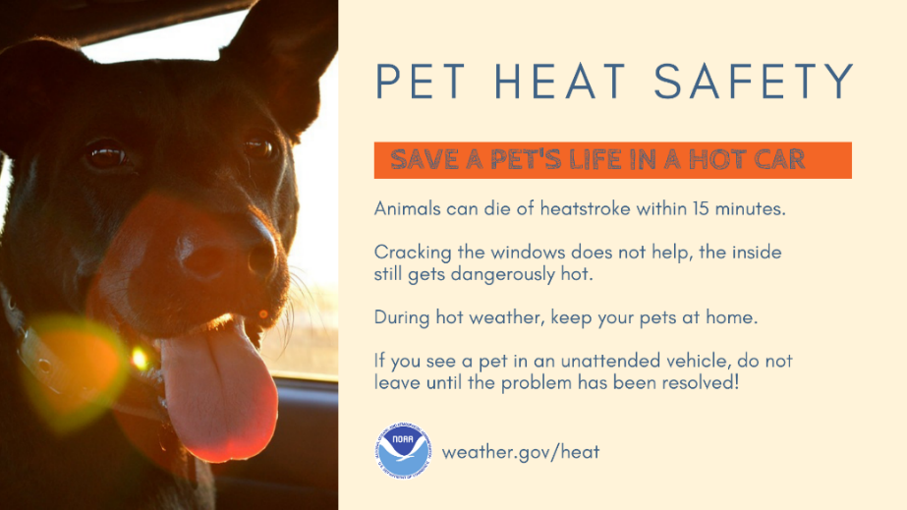
Pet Safety
- Never leave your pets in a parked car
- Not even for a minute! Not even with the car running and air conditioner on.
- Watch the humidity
- Taking a dog’s temperature will quickly tell you if there is a serious problem. Dogs’ temperatures should not reach over 104 degrees. If your dog’s temperature does, follow the instructions below for treating heat stroke.
- Limit exercise on hot days
- Take care when exercising your pet.
- Adjust intensity and duration of exercise in accordance with the temperature. On very hot days, limit exercise to early morning or evening hours.
- Pets respond differently to heat than humans do. (Dogs, for instance, sweat primarily through their feet.) And fans don’t cool off pets as effectively as they do people.
- Provide ample shade and water
- Any time your pet is outside, make sure they have protection from heat and sun and plenty of fresh, cold water. In heat waves, add ice to water when possible. Cool your pet inside and out
- Keep your pet from overheating indoors or out with a cooling body wrap, vest or mat. Soak these products in cool water, and they’ll stay cool (but usually dry) for up to three days. If your dog doesn’t find baths stressful, see if they enjoy a cooling soak.
- Watch for signs of heatstroke
- Some signs of heatstroke are heavy panting, glazed eyes, a rapid heartbeat, difficulty breathing, excessive thirst, lethargy, fever, dizziness, lack of coordination, profuse salivation, vomiting, a deep red or purple tongue, seizure and unconsciousness.
- Animals are at particular risk for heat stroke if they are very old, very young, overweight, not conditioned to prolonged exercise, or have heart or respiratory disease. Some breeds of dogs—like boxers, pugs, shih tzus and other dogs and cats with short muzzles—will have a much harder time breathing in extreme heat.
- How to treat a pet suffering from heatstroke
- Move your pet into the shade or an air-conditioned area. Apply ice packs or cold towels to their head, neck and chest or run cool (not cold) water over them. Let them drink small amounts of cool water or lick ice cubes. Take them directly to a veterinarian.
- More Information: https://www.humaneworld.org/en/resources/keep-pets-safe-temperature-gets
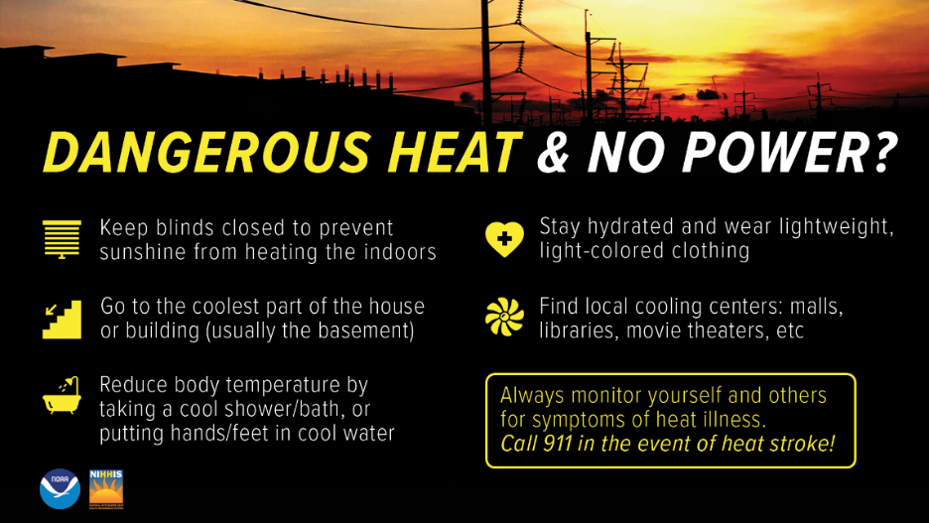
Power Outages and Avoiding “Brownouts”
- Heat waves increase electricity demand and can result in voltage reductions or “brownouts.” Take steps to conserve energy during periods of unusually high demand. Read tips on conserving power, both at home and in the office. Anything we can do to reduce electric consumption helps us — and everyone in the region — avoid power interruptions. Find additional ways to reduce power demands.
- Current outage information and how to report an outage:
- Northern Neck Electric COOP: https://www.nnec.coop/outages-safety/outage-center/
- Dominion Energy: https://www.dominionenergy.com/virginia/report-outage-or-emergency
- In the event of an outage, practice food safety and know When to Save It and When to Throw It Out
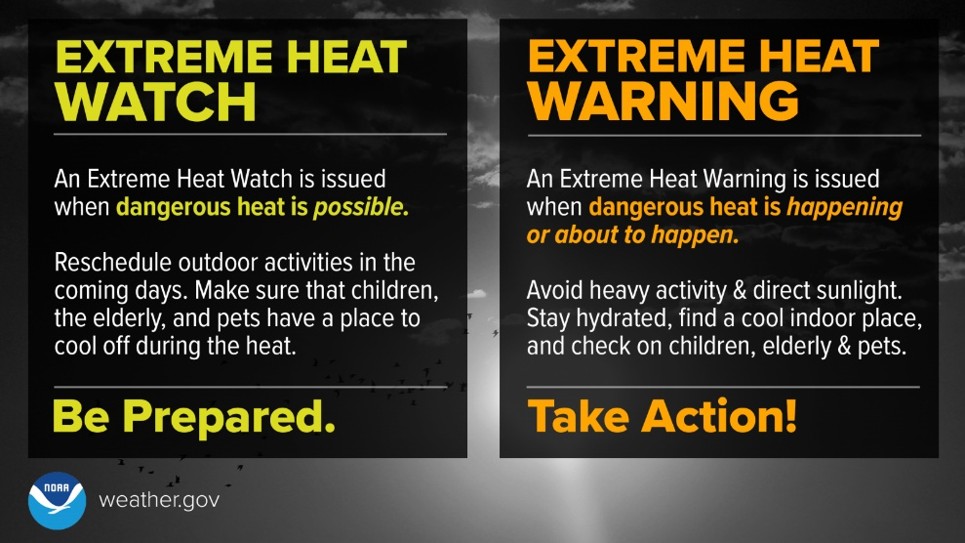
Extreme Heat Watches and Warnings
- IF YOU ARE UNDER AN EXTREME HEAT WARNING:
- Find air conditioning.
- Avoid strenuous activities.
- Watch for heat illness.
- Wear light clothing.
- Check on family members and neighbors.
- Drink plenty of fluids.
- Watch for heat cramps, heat exhaustion, and heat stroke.
- Never leave people or pets in a closed car.
- Prepare NOW
- Find places in your community where you can go to get cool.
- Learn to recognize the signs of heat-related illness.
- Keep your home cool by doing the following:
- Cover windows with drapes or shades.
- Weather-strip doors and windows.
- Use window reflectors, such as aluminum foil-covered cardboard, to reflect heat back outside.
- Add insulation to keep the heat out.
- Use attic fans to clear hot air.
- Install window air conditioners and insulate around them.